Can You Have Your Phone in Rehab? Packing Guide

November 27, 2026
By Legends Recovery Center

Here, you’ll learn what to pack for rehab and how phone policies can affect your stay, so you know what to ask before admission.

If you’re about to enter drug or alcohol treatment, you may worry about missing calls from your children or losing access to important information. So, can you have your phone in rehab?

The answer depends on where you receive care and how that program handles personal devices. A little preparation can help you understand those limits before arrival.

In this guide, you’ll learn how to prepare for your stay based on what your treatment center allows.

Key Takeaways

  • Phone permission varies. You might bring a device that staff store, receive scheduled access or keep it under specific limits.
  • Your facility’s checklist should guide clothing, documents, prescriptions and approved personal belongings.
  • Family contact and essential work communication need discussion before arrival, especially when someone depends on you.
  • Insurance checks should cover the recommended care level, required approvals and expected personal costs before you commit to treatment or make financial arrangements.

Can You Have Your Phone in Rehab?

You may be able to bring your phone to rehab, but your treatment center decides whether you can keep it with you and when you can use it.

Permission to arrive with a device can mean something different from permission to carry it throughout the day.

These are possible arrangements you may encounter.

Phone ArrangementWhat It MeansWhat You Need to Confirm
Device stored by staffYou bring your phone, then hand it overStorage arrangements and when it is returned
Scheduled accessYou use your phone during approved periodsTiming, location and any supervision
Personal possession with limitsYou keep the device under program rulesWhere and when use is permitted
Facility phone accessCalls take place through a shared or staff-arranged phoneHow calls are arranged

It makes sense to want a clear answer. In a small 2022 study across two New England treatment sites, 92% of participants, or 47 of 51, owned a smartphone. The sites were a Massachusetts inpatient detoxification unit and a Vermont outpatient methadone clinic.

Those findings describe phone ownership among the participants. They do not show whether participants could use their phones during treatment.

A smartphone rests diagonally on a closed black notebook on a light desk. Its white screen displays small cross marks near the corners. A black pen lies beside the phone, and coloured tabs extend from the notebook’s page edges.

Phone Access During Detox, Residential and Outpatient Care

Overnight treatment can involve restrictions that continue beyond therapy hours. Some programs hold your phone when you first arrive and allow access later in your stay. There is no waiting period you should assume applies everywhere.

In outpatient care, you generally return to your own living arrangements after sessions. However, device use during groups or appointments can still be restricted.

As you compare rehabs that allow cell phones, their written policies should explain which rules apply to your actual program.

The differences between inpatient and outpatient rehab help explain why an overnight stay requires different preparation from daytime attendance.

Pro tip: Check out SAMHSA’s explanation of treatment types. Use it to support the distinction between outpatient attendance and treatment involving an overnight stay.

How to Compare Phone Policies Before Admission

A rehab that allows phones may still require staff to store your device between approved periods. Another program might let you keep it while limiting use to particular rooms.

Example: Two facilities could both say phones are permitted. One might offer evening access, while the other allows possession throughout the day with restrictions during activities. Those are different experiences.

Before admission, you should ask exactly when you can use your phone and whether exceptions are possible. The answer should apply to the location where you will receive care. Phone access also needs to sit alongside the program’s ability to meet your treatment needs.

Rules for Smartwatches, Laptops and Other Devices

Even if your phone is allowed, you should check before you pack other devices or accessories.

The device’s features may matter. An e-reader with internet access could receive different treatment from an offline reading device.

If medical equipment depends on a connected phone, the clinical team needs to know before arrival. Your receiving team should assess that requirement separately from recreational device use.

What to Bring to Rehab for an Overnight Stay

Your facility’s packing list should guide what you bring.

You will generally need:

  • Photo identification
  • Insurance information
  • Prescriptions in their original labelled containers
  • Comfortable clothes
  • Approved personal-care items

What the program supplies also affects how much you need.

Pro tip: Check out SAMHSA’s guidance on starting treatment. It specifically advises checking rules for phones, medicines, food, tobacco, and contact with family and friends.

1. Identification and Insurance Documents

Your photo ID, insurance card, and any paperwork requested by admissions should be easy to reach at check-in. A small folder can keep them together.

If your insurance card or other documents are stored on your phone, you can ask whether printed copies are needed. You should also tell admissions about missing documents before travel. That gives the team a chance to explain your options rather than leave you to assume you cannot attend.

2. Prescriptions and Medical Supplies

Prescription medication should stay in its original pharmacy-labelled container. A separate medication list should explain how you take each medicine and identify the clinician who prescribed it.

Before arrival, your treatment team should confirm how much medication to bring. You should also ask about approval for anything you take without a prescription or any medical equipment you use.

You should continue prescribed treatment unless your clinician directs a change. If a packing restriction seems to conflict with your prescription, the team can explain what to do.

3. Comfortable Clothes and Practical Shoes

Everyday clothes, sleepwear, underwear, socks, and weather layers should cover the activities and conditions you expect. Comfortable shoes can help with daily movement, while suitable exercise clothes may be useful for approved activities.

Legends Recovery’s homepage packing guidance recommends a few days of comfortable clothes and confirms on-site laundry. That means a longer program does not require an outfit for every day of the stay.

Your clothing quantity should reflect laundry access and available storage. Personal sports equipment requires separate approval.

4. Toiletries and Personal-Care Items

Basic dental care, shampoo, body wash, deodorant, skin care, and menstrual products may be useful. However, packaging and ingredient requirements differ.

You can ask whether products need to be unopened, whether glass containers or aerosols are restricted, and how razors are handled. A product label can help staff answer a specific question. The word “alcohol” can describe different ingredients, so the facility should confirm what its policy permits.

Legends’ detailed toiletries requirements should be requested directly before you pack.

5. Small Comfort Items

An approved personal item, such as a family photo, can help you feel more at home. You can bring something meaningful that you already own without buying extra items.

Before adding towels, bedding, or a pillow, you can ask what the program provides. Bulky belongings may take up limited storage space or require approval.

Restricted Belongings and What Happens at Check-In

At check-in, staff may review and record your belongings before you settle in. Your facility’s rehab rules should explain which items require approval or secure storage.

These are categories worth checking:

  • Alcohol, illicit substances, weapons, and drug paraphernalia are prohibited.
  • Expensive jewellery, large amounts of cash, and irreplaceable valuables are best left at home.
  • Nicotine products, outside food, and personal equipment can have program-specific restrictions.

The location’s written inpatient rehab rules and regulations should be your reference for anything uncertain. An item permitted during a previous admission may receive a different decision elsewhere.

You can also ask whether staff provide a written record of stored belongings so you can keep track of what you hand over. Before you travel, the facility should explain what happens to anything you cannot keep during your stay.

Practical Arrangements Before You Leave Home

Some preparation involves the responsibilities you leave behind. A backup plan can help when important information is available only through your device.

These are useful arrangements to make:

  • A paper contact list can keep essential numbers available.
  • Childcare, pet care and household tasks may need a trusted person’s help.
  • Bills and accounts that require phone authentication may need another approved access method.
  • Transport, arrival time and accessibility requirements should be confirmed.

A 2021 study of 56 people in intensive outpatient substance use treatment found that 27%, or 15 participants, experienced an interruption in smartphone access during treatment or the following three months. This finding supports the need for a backup for essential information. It does not describe belongings lost inside residential facilities.

Your backup arrangements should protect account security. For example, an account’s official recovery method may be more suitable than sharing your password with someone.

A clipboard holds a blank packing checklist on a light marble surface beside an open laptop. A white fountain pen rests above the clipboard. The overhead view shows space to write down belongings and tasks before leaving home.

Insurance Coverage and Costs to Check Before Admission

Your insurance benefits should be checked for the level of care recommended to you, whether that is detox, residential treatment, PHP, or IOP. Coverage for one service does not establish approval for every later stage.

Your insurer and facility should explain whether treatment needs prior authorization and who handles that process. You should also confirm the location’s network status and ask how coverage is reviewed if your stay needs to be extended.

Expected personal costs may involve a deductible, copayments, coinsurance or prescription charges. A written estimate can help you understand what remains uncertain.

You can check your insurance coverage with Legends before admission.

Admission Support at Legends Recovery in Ohio

Legends Recovery’s Admissions team can help you discuss preparation questions before you arrive. Its Green Springs and Defiance locations provide medical detox and residential treatment, while other care options are available through the wider Legends network.

If you have searched for “inpatient rehab near me” in Ohio, the next step is a conversation about the care you need and the location that provides it. Legends offers transportation support, with arrangements to be confirmed for your situation.

You can request current packing instructions and a direct explanation of phone access for your program. If you have a particular medical need or an item you cannot manage without, the team should know before your admission date.

Your Next Step Before Admission

The answer to “can you have your phone in rehab” comes from the current policy for your actual treatment program. A clear conversation before arrival can help you understand what access will look like.

If any instruction remains uncertain, you can ask admissions to explain it so you arrive with fewer unanswered questions.

FAQs

Why Don’t All Rehab Centers Allow Phones?

Some centers restrict phones to reduce distractions and protect patients’ privacy. They may also limit contact with people connected to past substance use. Photos and recordings of other patients or sessions may be prohibited even when calls are allowed.

What if I Need to Stay in Touch With Family or Work?

You should discuss essential communication with admissions before arrival. The team can explain how to arrange contact and receive urgent messages. Permission to make calls does not automatically mean you can work remotely.

Can You Have Visitors in Rehab?

Visits may be allowed under your facility’s policy. Before anyone travels, you should confirm visiting arrangements and whether children can attend. A family therapy appointment does not automatically permit a social visit.

What Happens if I Forget Something I Need?

You should tell staff so they can help you arrange a replacement or approved delivery. Missing medication or medical equipment needs prompt attention from the clinical team. Someone should confirm delivery rules before bringing anything to the facility.

Here, you’ll learn what to pack for rehab and how phone policies can affect your stay, so you know what to ask before admission.

If you’re about to enter drug or alcohol treatment, you may worry about missing calls from your children or losing access to important information. So, can you have your phone in rehab?

The answer depends on where you receive care and how that program handles personal devices. A little preparation can help you understand those limits before arrival.

In this guide, you’ll learn how to prepare for your stay based on what your treatment center allows.

Key Takeaways

  • Phone permission varies. You might bring a device that staff store, receive scheduled access or keep it under specific limits.
  • Your facility’s checklist should guide clothing, documents, prescriptions and approved personal belongings.
  • Family contact and essential work communication need discussion before arrival, especially when someone depends on you.
  • Insurance checks should cover the recommended care level, required approvals and expected personal costs before you commit to treatment or make financial arrangements.

Can You Have Your Phone in Rehab?

You may be able to bring your phone to rehab, but your treatment center decides whether you can keep it with you and when you can use it.

Permission to arrive with a device can mean something different from permission to carry it throughout the day.

These are possible arrangements you may encounter.

Phone ArrangementWhat It MeansWhat You Need to Confirm
Device stored by staffYou bring your phone, then hand it overStorage arrangements and when it is returned
Scheduled accessYou use your phone during approved periodsTiming, location and any supervision
Personal possession with limitsYou keep the device under program rulesWhere and when use is permitted
Facility phone accessCalls take place through a shared or staff-arranged phoneHow calls are arranged

It makes sense to want a clear answer. In a small 2022 study across two New England treatment sites, 92% of participants, or 47 of 51, owned a smartphone. The sites were a Massachusetts inpatient detoxification unit and a Vermont outpatient methadone clinic.

Those findings describe phone ownership among the participants. They do not show whether participants could use their phones during treatment.

A smartphone rests diagonally on a closed black notebook on a light desk. Its white screen displays small cross marks near the corners. A black pen lies beside the phone, and coloured tabs extend from the notebook’s page edges.

Phone Access During Detox, Residential and Outpatient Care

Overnight treatment can involve restrictions that continue beyond therapy hours. Some programs hold your phone when you first arrive and allow access later in your stay. There is no waiting period you should assume applies everywhere.

In outpatient care, you generally return to your own living arrangements after sessions. However, device use during groups or appointments can still be restricted.

As you compare rehabs that allow cell phones, their written policies should explain which rules apply to your actual program.

The differences between inpatient and outpatient rehab help explain why an overnight stay requires different preparation from daytime attendance.

Pro tip: Check out SAMHSA’s explanation of treatment types. Use it to support the distinction between outpatient attendance and treatment involving an overnight stay.

How to Compare Phone Policies Before Admission

A rehab that allows phones may still require staff to store your device between approved periods. Another program might let you keep it while limiting use to particular rooms.

Example: Two facilities could both say phones are permitted. One might offer evening access, while the other allows possession throughout the day with restrictions during activities. Those are different experiences.

Before admission, you should ask exactly when you can use your phone and whether exceptions are possible. The answer should apply to the location where you will receive care. Phone access also needs to sit alongside the program’s ability to meet your treatment needs.

Rules for Smartwatches, Laptops and Other Devices

Even if your phone is allowed, you should check before you pack other devices or accessories.

The device’s features may matter. An e-reader with internet access could receive different treatment from an offline reading device.

If medical equipment depends on a connected phone, the clinical team needs to know before arrival. Your receiving team should assess that requirement separately from recreational device use.

What to Bring to Rehab for an Overnight Stay

Your facility’s packing list should guide what you bring.

You will generally need:

  • Photo identification
  • Insurance information
  • Prescriptions in their original labelled containers
  • Comfortable clothes
  • Approved personal-care items

What the program supplies also affects how much you need.

Pro tip: Check out SAMHSA’s guidance on starting treatment. It specifically advises checking rules for phones, medicines, food, tobacco, and contact with family and friends.

1. Identification and Insurance Documents

Your photo ID, insurance card, and any paperwork requested by admissions should be easy to reach at check-in. A small folder can keep them together.

If your insurance card or other documents are stored on your phone, you can ask whether printed copies are needed. You should also tell admissions about missing documents before travel. That gives the team a chance to explain your options rather than leave you to assume you cannot attend.

2. Prescriptions and Medical Supplies

Prescription medication should stay in its original pharmacy-labelled container. A separate medication list should explain how you take each medicine and identify the clinician who prescribed it.

Before arrival, your treatment team should confirm how much medication to bring. You should also ask about approval for anything you take without a prescription or any medical equipment you use.

You should continue prescribed treatment unless your clinician directs a change. If a packing restriction seems to conflict with your prescription, the team can explain what to do.

3. Comfortable Clothes and Practical Shoes

Everyday clothes, sleepwear, underwear, socks, and weather layers should cover the activities and conditions you expect. Comfortable shoes can help with daily movement, while suitable exercise clothes may be useful for approved activities.

Legends Recovery’s homepage packing guidance recommends a few days of comfortable clothes and confirms on-site laundry. That means a longer program does not require an outfit for every day of the stay.

Your clothing quantity should reflect laundry access and available storage. Personal sports equipment requires separate approval.

4. Toiletries and Personal-Care Items

Basic dental care, shampoo, body wash, deodorant, skin care, and menstrual products may be useful. However, packaging and ingredient requirements differ.

You can ask whether products need to be unopened, whether glass containers or aerosols are restricted, and how razors are handled. A product label can help staff answer a specific question. The word “alcohol” can describe different ingredients, so the facility should confirm what its policy permits.

Legends’ detailed toiletries requirements should be requested directly before you pack.

5. Small Comfort Items

An approved personal item, such as a family photo, can help you feel more at home. You can bring something meaningful that you already own without buying extra items.

Before adding towels, bedding, or a pillow, you can ask what the program provides. Bulky belongings may take up limited storage space or require approval.

Restricted Belongings and What Happens at Check-In

At check-in, staff may review and record your belongings before you settle in. Your facility’s rehab rules should explain which items require approval or secure storage.

These are categories worth checking:

  • Alcohol, illicit substances, weapons, and drug paraphernalia are prohibited.
  • Expensive jewellery, large amounts of cash, and irreplaceable valuables are best left at home.
  • Nicotine products, outside food, and personal equipment can have program-specific restrictions.

The location’s written inpatient rehab rules and regulations should be your reference for anything uncertain. An item permitted during a previous admission may receive a different decision elsewhere.

You can also ask whether staff provide a written record of stored belongings so you can keep track of what you hand over. Before you travel, the facility should explain what happens to anything you cannot keep during your stay.

Practical Arrangements Before You Leave Home

Some preparation involves the responsibilities you leave behind. A backup plan can help when important information is available only through your device.

These are useful arrangements to make:

  • A paper contact list can keep essential numbers available.
  • Childcare, pet care and household tasks may need a trusted person’s help.
  • Bills and accounts that require phone authentication may need another approved access method.
  • Transport, arrival time and accessibility requirements should be confirmed.

A 2021 study of 56 people in intensive outpatient substance use treatment found that 27%, or 15 participants, experienced an interruption in smartphone access during treatment or the following three months. This finding supports the need for a backup for essential information. It does not describe belongings lost inside residential facilities.

Your backup arrangements should protect account security. For example, an account’s official recovery method may be more suitable than sharing your password with someone.

A clipboard holds a blank packing checklist on a light marble surface beside an open laptop. A white fountain pen rests above the clipboard. The overhead view shows space to write down belongings and tasks before leaving home.

Insurance Coverage and Costs to Check Before Admission

Your insurance benefits should be checked for the level of care recommended to you, whether that is detox, residential treatment, PHP, or IOP. Coverage for one service does not establish approval for every later stage.

Your insurer and facility should explain whether treatment needs prior authorization and who handles that process. You should also confirm the location’s network status and ask how coverage is reviewed if your stay needs to be extended.

Expected personal costs may involve a deductible, copayments, coinsurance or prescription charges. A written estimate can help you understand what remains uncertain.

You can check your insurance coverage with Legends before admission.

Admission Support at Legends Recovery in Ohio

Legends Recovery’s Admissions team can help you discuss preparation questions before you arrive. Its Green Springs and Defiance locations provide medical detox and residential treatment, while other care options are available through the wider Legends network.

If you have searched for “inpatient rehab near me” in Ohio, the next step is a conversation about the care you need and the location that provides it. Legends offers transportation support, with arrangements to be confirmed for your situation.

You can request current packing instructions and a direct explanation of phone access for your program. If you have a particular medical need or an item you cannot manage without, the team should know before your admission date.

Your Next Step Before Admission

The answer to “can you have your phone in rehab” comes from the current policy for your actual treatment program. A clear conversation before arrival can help you understand what access will look like.

If any instruction remains uncertain, you can ask admissions to explain it so you arrive with fewer unanswered questions.

FAQs

Why Don’t All Rehab Centers Allow Phones?

Some centers restrict phones to reduce distractions and protect patients’ privacy. They may also limit contact with people connected to past substance use. Photos and recordings of other patients or sessions may be prohibited even when calls are allowed.

What if I Need to Stay in Touch With Family or Work?

You should discuss essential communication with admissions before arrival. The team can explain how to arrange contact and receive urgent messages. Permission to make calls does not automatically mean you can work remotely.

Can You Have Visitors in Rehab?

Visits may be allowed under your facility’s policy. Before anyone travels, you should confirm visiting arrangements and whether children can attend. A family therapy appointment does not automatically permit a social visit.

What Happens if I Forget Something I Need?

You should tell staff so they can help you arrange a replacement or approved delivery. Missing medication or medical equipment needs prompt attention from the clinical team. Someone should confirm delivery rules before bringing anything to the facility.

Explore more topics

A man reclines on a mustard-yellow sofa with both hands on his head during a counseling session. A woman sits beside him with a clipboard and pen as she listens. A black table lamp and wooden flooring give the consultation room a comfortable, home-like appearance.
November 27, 2026

Meth Withdrawal Symptoms and Timeline After You Stop

Wondering what meth withdrawal can feel like and how symptoms may change over time, so you know when to ask for help?

If you’re ready to stop using meth, fear of what comes next can make that decision harder. You may wonder what the first few days will feel like or when you’ll feel more like yourself. Meth withdrawal symptoms vary, so it helps to know what you might expect and when to ask for support.

In this guide, we’ll explain how withdrawal can progress and what support may help along the way.

Key Takeaways

  • Meth withdrawal can begin soon after you stop or reduce repeated use.
  • Early symptoms may involve exhaustion, increased appetite, and changes in mood or sleep.
  • The strongest discomfort often eases during the first week, while some difficulties can continue for weeks or months.
  • Your health and pattern of use can affect the timeline, so recovery has no fixed deadline.
  • Thoughts of self-harm, hallucinations, or serious physical symptoms need urgent assessment.
  • Professional support can help you manage symptoms and prepare for continued treatment.
  • Before treatment begins, you can ask about insurance coverage and possible personal costs.

Meth Withdrawal Symptoms

After regular meth use stops or decreases, your body needs time to adjust. You may feel drained or find your emotions harder to manage. If you’ve had little sleep or food during use, that can add to the exhaustion.

Even familiar tasks may feel harder. For example, you might lose track of breakfast halfway through. Support with daily responsibilities can give you some room to recover.

The signs of meth withdrawal vary from person to person. You may experience some of the following symptoms:

  • Sleep and energy: You may sleep much more than usual or have trouble falling asleep at night. During the day, tiredness can make even small tasks feel demanding.
  • Appetite and discomfort: Your appetite may increase as you begin to eat more regularly. You might also experience headaches or body aches.
  • Mood and motivation: You may feel low or become irritated more easily. Some people experience anhedonia, which means familiar activities bring less pleasure than usual.
  • Concentration: Your thoughts may feel slower, so decisions take longer. You may also find it harder to follow a conversation.
  • Cravings: A strong urge to use again may appear even when you feel committed to stopping.

If you experience paranoia or hallucinations, you should seek medical help promptly. The section below explains which warning signs need urgent attention.

Because other conditions can cause similar symptoms, a clinician will look at your recent substance use alongside your health history to understand what is happening.

A man rests on a light-colored sofa with his eyes closed and one forearm across his forehead. His head rests on blue cushions, and he wears a brown ribbed sweater with blue trousers. A black smartphone lies beside him on the sofa, with wooden flooring visible nearby.

Meth Withdrawal Timeline

Symptoms can begin soon after you stop or reduce repeated use, but the timing varies. The meth withdrawal phases describe general patterns, and their boundaries can overlap.

Here’s what you may experience at each stage:

Approximate TimingPhaseWhat You May Experience
Soon after your last useInitial crashYou may feel exhausted and sleep more than usual.
During the first weekAcute withdrawalSymptoms may feel strongest before they gradually ease.
Weeks two to fourEarly recoveryEveryday tasks may become easier, while cravings can still come and go.
Beyond four weeksContinued symptomsSome difficulties may continue and need further care.

The Initial Crash

The crash can feel abrupt, particularly after a period with little sleep.

The 2024 ASAM/AAAP guideline describes 12-24 hours of sleepiness and irritability in many patients after stimulant use stops or falls sharply. This describes an early symptom period across stimulants.

Your symptoms may begin at a different time, so the timing serves as a general guide. When you speak with a clinician, you can share when you last used meth and how you’ve slept since then. These details help them assess your condition and the support you need.

Acute Withdrawal During the First Week

Symptoms may feel strongest during the first few days before they gradually ease. A 2023 review by UCLA researchers reports that major acute discomfort from psychostimulant withdrawal usually resolves within 4-7 days. The review covers methamphetamine and cocaine.

Your experience may follow a different pace, and some symptoms can continue longer. You can ask for support at any point, especially if symptoms worsen or make daily life difficult.

Early Recovery During Weeks Two to Four

The UCLA review identifies weeks 2-4 as an early protracted period. “Protracted” simply means that some effects continue beyond the earliest stage.

You may find it easier to complete ordinary tasks while still having difficult moments. Even after a productive morning, you may still need rest or help with daily responsibilities.

It may help to describe progress in practical terms at appointments. For example, you could explain whether you can prepare meals more easily or concentrate for longer. Those details help explain your current needs.

Symptoms That Continue Beyond Four Weeks

Some difficulties may continue beyond the first month. The hospital medicine review reports that post-acute symptoms can last up to six months for some people, although your recovery may follow a different course.

If symptoms persist, a clinician can help assess whether they relate to withdrawal or another health condition. This also gives you a chance to discuss how you feel and whether your care needs to change.

You can ask for an assessment at any stage. Severe or worsening symptoms deserve prompt attention, even during a period when some ongoing difficulties are expected.

Why Withdrawal Can Feel Different for Each Person

Your pattern of use and health history can affect withdrawal symptoms from meth. A clinician will also consider recent sleep, nutrition, prescription medicines, and any other substances you have used.

Those details matter more than a comparison with someone online. A person who has barely slept and also uses sedatives may need a different assessment from someone with a different history and dependable support at home.

These are hypothetical comparisons, and neither description is enough to choose a care setting. It helps to share what you used and when, even if you are unsure of the amount. You can also explain what made previous attempts difficult. The purpose is to give the clinician information that supports a safer, more useful plan for you.

When Do You Need Urgent Help?

Some symptoms require immediate medical attention. You should seek urgent help if you experience:

  • Thoughts of suicide or feel unable to keep yourself safe.
  • Severe confusion or agitation.
  • Paranoia or hallucinations.
  • Chest pain or difficulty breathing.
  • A seizure or high fever.

If there is immediate danger, you or someone nearby should call 911 or go to an emergency department. You should avoid driving yourself if you feel impaired.

Serious physical symptoms may have a cause beyond withdrawal, so prompt medical assessment can help identify what is happening.

The ASAM/AAAP guideline identifies these kinds of concerns when deciding whether emergency care is needed. An admissions conversation can help with planned treatment, but immediate danger needs an emergency response. You do not need to wait for a program assessment first.

What Can Help During Meth Withdrawal?

Meth withdrawal management starts with an assessment to understand your symptoms and find the right support for you.

Supportive Care and Medication

A calm place to rest and regular meals can help you through withdrawal. Your care team can also advise on fluids based on your health needs and assess how much medical support you need.

A clinician may prescribe medication for meth withdrawal to ease specific symptoms or treat a co-occurring condition. There is currently no FDA-approved medication specifically for methamphetamine use disorder. Research on medication for the overall withdrawal syndrome remains limited.

Your clinician will review your health history and other substance use before recommending medication. This helps reduce the risk of harmful interactions.

We offer medically supervised detox in Ohio, where you can receive monitoring and discuss care suited to your symptoms.

Continued Treatment After Withdrawal Support

Withdrawal care helps you through the initial adjustment after you stop using meth. Ongoing treatment helps you build skills to handle situations that could lead you back to use.

For example, therapy can help you plan how to respond if someone you know offers you drugs. Your care team can recommend a program that provides the support you need.

A closer look at the differences between inpatient and outpatient rehab can help you understand how each option might fit into your daily life.

Two young men with backpacks walk side by side through a sunlit park as they smile and talk. One wears a gray hoodie and holds a notebook, while the other wears a green and cream sweater and gestures with his hand. Leafy trees and a black lamppost appear in the background.

How Can You Check Insurance Coverage for Treatment?

You can ask us and your insurer to confirm what your plan covers before treatment begins. We accept Medicaid and most insurance plans, with benefits that vary by plan and level of care.

Your plan may cover detox differently from residential or outpatient treatment. You can also ask whether prior authorization is required, which means approval from your insurer before certain services begin.

Your costs may depend on whether we are in your plan’s network. A deductible is the amount you pay before certain benefits begin. Copayments are set charges, while coinsurance is your share of covered costs.

You can ask us to check your insurance and explain your coverage and potential costs.

Meth Withdrawal Support at Legends Recovery

At Legends Recovery, we offer medical detox in Defiance and Green Springs, Ohio. You’ll have around-the-clock nursing support, with daily physician check-ins to assess how you’re doing. Our team also provides mental health support as you adjust.

When you’re ready for the next stage, we can help you plan continued care. We offer residential addiction treatment in Ohio and outpatient options based on your needs.

Whether you’re asking for yourself or someone you love, our admissions team can explain what to expect. You can discuss transportation arrangements and ask about the support available before you make a decision.

Your Next Step

Meth withdrawal symptoms can make everyday life feel harder, and recovery takes a different pace for each person. Support can help you manage this period and decide what comes next. Whenever you feel ready to discuss treatment, our team can answer your questions and help you understand what your insurance may cover.

FAQs

How Long Is Withdrawal From Drugs Other Than Meth?

The duration varies by substance and your pattern of use. Each drug has its own withdrawal timeline and risks. If you use several substances, a clinician can assess what to expect when you stop.

Does Withdrawal Mean the Drug Has Left Your Body?

Withdrawal symptoms can continue after your body has cleared the drug. Drug clearance and recovery follow different timelines, so how you feel still matters after a negative test.

Does Withdrawal Automatically Mean You Have an Addiction?

Withdrawal is one part of an assessment. A clinician uses substance use disorder criteria to assess your pattern of use and its effects on your life.

Can You Work or Drive While You Recover?

Your readiness depends on how you feel and any medication effects. If you feel drowsy or have trouble concentrating, you should wait until you’re alert enough to drive or do safety-sensitive work. Your clinician can help you plan a safe return.

A close-up shows two people seated opposite each other during a counselling conversation. One person wears a grey sweatshirt and holds their hands together above their lap. The other person holds an open notebook and writes with a pen.
November 27, 2026

What Is Residential Treatment? A Day Inside Rehab

Understand what residential treatment involves, from daily routines and therapy to insurance coverage and support after rehab.

Staying somewhere unfamiliar can feel intimidating, especially when you cannot picture what happens between appointments. If you’re asking “what is residential treatment,” you may also wonder who you’ll spend time with and whether you’ll have space to yourself.

This guide focuses on adult drug and alcohol addiction care, with a practical look at an ordinary day and the questions to ask before admission.

Key Takeaways

  • Residential treatment means living at a facility while receiving addiction care through therapy and a structured daily routine.
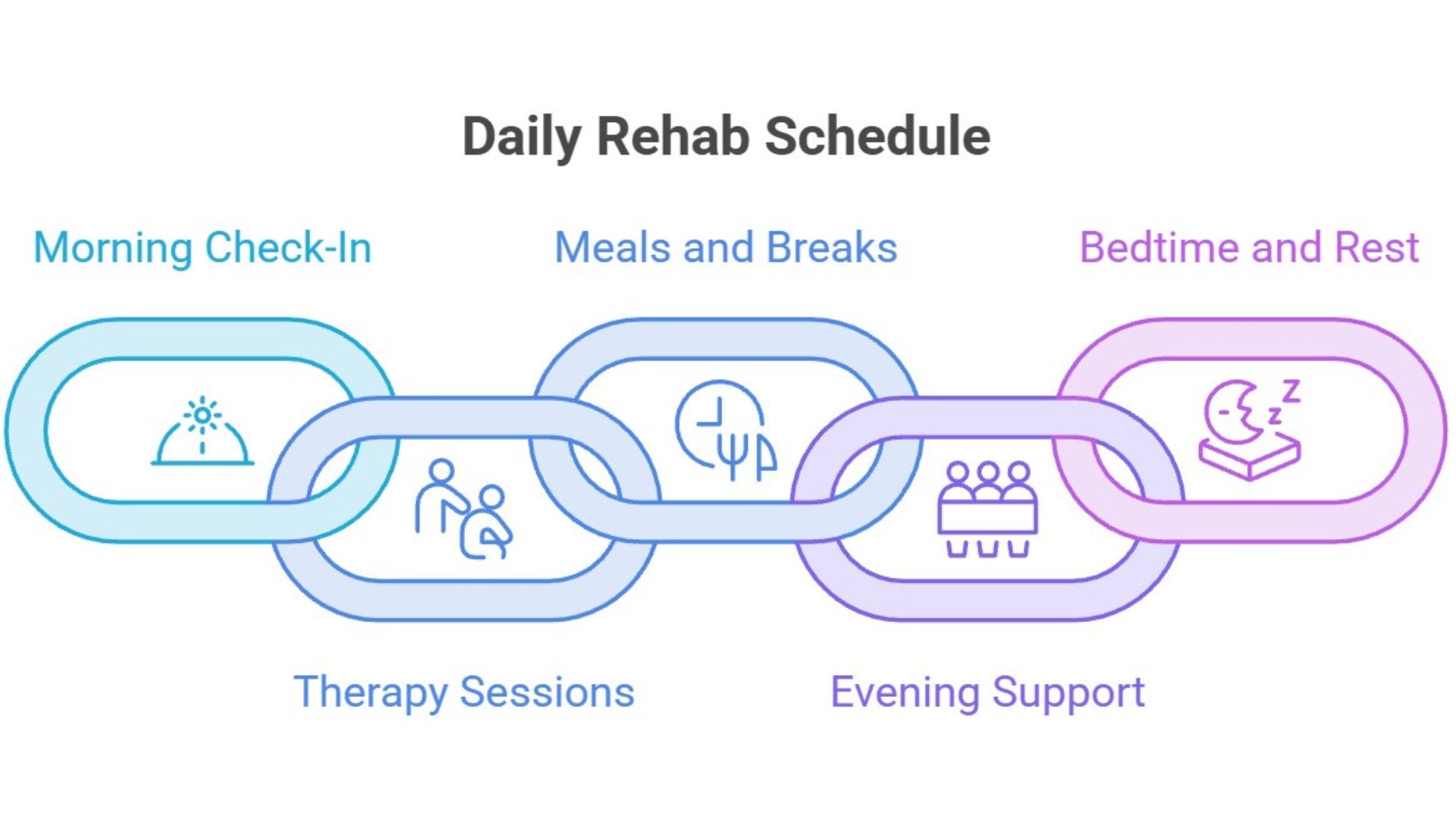
  • A typical day includes check-ins, treatment sessions, meals, breaks, personal time, and rest, with activities varying by program.
  • Medical detox may come first if withdrawal care is needed, though some people enter residential care directly.
  • The right level of care and length of stay depend on clinical needs and progress.
  • Your costs depend on the facility and insurance benefits, so request a written estimate before admission.
  • Legends Recovery offers residential care in Green Springs and Defiance, Ohio, with admissions support and discharge planning.

What Is Residential Treatment for Addiction?

Residential treatment is live-in addiction care that combines therapy with a planned daily routine. You stay at the facility between sessions, with staff support available according to the program’s level of care.

Residential and hospital inpatient care differ in the medical support they provide. Hospital inpatient services provide hospital-level medical or psychiatric care, while the staff and medical care available differ between residential facilities. Some providers use both terms for the same program, so it helps to ask what care is available on-site.

With outpatient treatment, you attend scheduled sessions and return home afterward.

Admission Checks and What to Bring

At admission, staff assesses your immediate care needs and whether medical detox is necessary. You may enter residential care directly if withdrawal care is unnecessary or already completed.

Your packing list for residential treatment should follow the facility’s current rules.

What to PrepareWhat to Confirm
DocumentsID and insurance information
MedicationsPrescription details and instructions for bringing medications
Clothing and toiletriesComfortable clothes and permitted personal-care items
Personal belongingsRules for phones and valuables

A 2024 North Carolina study found that only 10.6% of 66 residential service providers provided medicines such as methadone or buprenorphine to treat opioid addiction on-site. The sample included licensed and unlicensed services. Before admission, you can ask how your chosen facility handles prescribed addiction medication.

What Does Rehab Look Like From Morning to Bedtime?

A day in residential rehab usually includes treatment sessions, meals, breaks, and time to rest. You live at the facility, so your surroundings matter too.

So, before admission, ask to see photos of the bedrooms, therapy rooms, dining areas, and shared spaces. You can also ask where you can spend quiet time between activities.

The example below shows how a day might unfold. Your actual schedule will depend on the facility and your care plan.

Morning Check-In and Breakfast

You might wake up with time to wash, get dressed and eat breakfast before the first scheduled activity. A brief check-in gives you a chance to describe how you slept or raise an immediate concern. Medication may be part of the morning when prescribed and scheduled.

For example, if you wake up anxious about joining a group, you can ask staff what to expect before it begins. The point is to speak up early so staff can respond to what you need that morning.

Therapy Sessions and Practice With Recovery Skills

Treatment sessions give you time to understand substance use patterns and practice responses you can use outside treatment. In residential drug treatment, a group might begin with a check-in, move into a discussion about triggers, and finish with a coping-skills exercise.

Cognitive behavioral therapy, or CBT, examines connections between thoughts, feelings, and behavior. CBT can also help you recognize and manage situations that could lead to substance use.

Imagine someone who thinks, “I’ve had an argument, so using is the only way to calm down.” A therapist might help them question that thought and rehearse another response, such as taking a pause and calling a support person.

Dialectical behavior therapy, or DBT, teaches skills for managing strong emotions and stressful situations. Private appointments offer room to discuss personal goals or concerns that feel difficult to raise in a group. Family appointments may address communication when appropriate. The care plan determines the mix and frequency.

The therapy approaches used at Legends Recovery include these methods alongside individual, group, and family therapy.

A person writes on a lined worksheet attached to a clipboard during a one-to-one therapy session. Another person reclines on a white sofa in the background, with their legs and feet visible. Natural light enters through a nearby window, and a large green plant stands beside the sofa.

Meals, Breaks and Activities Between Sessions

Between appointments, you need time to eat, rest, and take in what you’ve discussed. A lunch break may give you a chance to sit with others or have a quieter moment before the afternoon begins.

Depending on the program, activities might include exercise, creative work, or time outside. Participation should account for your health and current needs. Quiet time could mean reading or writing down something you want to discuss later.

These breaks also give you time to practice everyday habits, such as eating regularly and asking for space when you feel overwhelmed.

Evening Peer Support and Personal Time

Life in rehab often becomes less appointment-focused in the evening, although the amount of personal time varies. Some programs hold a peer meeting or a reflection activity after daytime treatment ends.

You may have time to talk through a difficult moment from your day with peers. Later, the program’s rules may allow a family call or some time to yourself. Before admission, you can ask about phone access and whether weekend arrangements differ.

Bedtime, Overnight Support and Rest

Quiet hours help residents prepare for sleep, but there is no universal bedtime across facilities. You may have time to wind down before lights-out under the program’s rules.

Before your first night, learn how to reach staff if you feel distressed or have another concern. Ask who is available overnight and what help they can provide. Residential staffing should match the program’s level of care and does not automatically mean hospital-level monitoring.

An infographic illustrates an example daily rehab routine through five connected links that change from blue to purple. The sequence starts with a morning check-in and therapy sessions, followed by meals and breaks. Evening support leads into bedtime and rest. Simple icons represent each activity along the chain.

Discharge Planning and Support After Residential Care

Your care team can help you prepare for discharge during your stay. Before you leave, you should know your next appointment and whom to contact for help. Further treatment depends on your needs.

In a 2024 Rhode Island study, 83.1% of participants reported some substance use treatment within 30 days after residential discharge. That figure describes the study’s participants. You can also stay connected through options such as ongoing support through Legends’ alumni program.

Does Insurance Cover Residential Treatment?

Your insurance may help pay for residential addiction treatment. The amount covered depends on your plan, the facility, and the care you need. Before admission, ask the treatment center and your insurer to explain your benefits and what you may need to pay yourself.

Check Coverage for Each Level of Care

Ask which services your plan covers, including medical detox, residential treatment, and follow-up outpatient care. If your care team recommends a partial hospitalization program, or PHP, or an intensive outpatient program, or IOP, ask about coverage for that next step too.

Approval for one service does not automatically confirm coverage for every part of your treatment.

Ask Whether Prior Authorization Is Required

Some plans require approval before you begin certain services. This is called prior authorization. Your treatment provider may need to send information about your health and why the recommended care is needed.

Ask who handles this request, whether approval is in place, and whether further reviews are needed during your stay. Prior authorization does not guarantee that your insurer will pay every charge.

Understand Your Expected Costs

Ask whether the specific facility is in your plan’s network. Then request a written estimate of your costs. Depending on your plan, these may include a deductible, which is an amount you pay before certain benefits begin, a fixed copayment, or a percentage of covered charges called coinsurance. Ask whether any services are billed separately and how a change in your length of stay could affect the estimate.

Legends Recovery accepts Medicaid and most major insurance plans. You can ask our admissions team to check your specific plan and explain the next steps before admission.

Residential Addiction Care at Legends Recovery in Ohio

If you’re looking for a residential treatment center in Ohio, Legends Recovery offers care in Green Springs and Defiance. Our Cleveland location provides outpatient care, so confirm the location when you discuss admission.

Both residential location pages list private bedrooms and bathrooms. Green Springs also lists a yoga and meditation room, while Defiance lists a hair and beauty salon. These details can help you picture the surroundings and prepare questions about your stay.

The admissions team can discuss location arrangements and transportation for your circumstances. You can also ask about current availability and any accessibility needs before making plans. A conversation gives you an opportunity to assess whether the setting fits your needs.

Conclusion

Understanding what residential treatment is can make the next conversation more specific. You can ask about the support you need and what admission would involve.

You can start by asking Legends Recovery to check your insurance and explain your expected costs. Our admissions team can also help you understand which program may fit your needs.

FAQs

When Is Residential Treatment Necessary?

Residential care may be appropriate when outpatient support cannot meet your needs. A clinician reviews your substance use, health, and support at home to recommend a suitable level of care.

How Much Does Residential Treatment Cost?

Your cost depends on your insurance benefits, the facility, and your length of stay. Ask Legends Recovery to check your coverage and provide a written estimate of what you may need to pay.

How Long Are Residential Treatment Programs?

Stays vary with your care needs. Legends Recovery describes its offering as around 30 days. A clinical assessment helps determine whether short-term residential treatment fits your needs.

November 27, 2026

IOP vs PHP: What to Know Before Choosing Outpatient Treatment

Compare IOP and PHP to understand treatment schedules, support levels, and how a clinical assessment helps determine the right outpatient care for your needs.

After a treatment centre recommends PHP or IOP, you may still be unsure what the programme would mean for your week. How much help would you receive, and what happens once you leave each session?

Whether you need addiction treatment yourself or support a loved one, it helps to understand the difference between PHP and IOP.

In this guide, we’ll compare the programmes and explain what clinicians consider before they recommend care.

Key Takeaways

  • PHP provides more intensive daytime care, while IOP offers structured treatment with a lighter schedule.
  • Under Medicare coverage rules, PHP requires at least 20 weekly service hours and IOP requires nine.
  • A clinical assessment considers your current symptoms, withdrawal risk and ability to manage safely between sessions.
  • Both programmes require a suitable living arrangement and reliable support outside treatment.
  • Therapy and psychiatric services vary, so ask what your proposed programme includes.
  • Treatment length varies, and either programme can come first. Your team can adjust care as needs change.
  • Legends Recovery can discuss Cleveland programmes and help verify your insurance benefits.

IOP vs PHP: What Is the Difference?

PHP (Partial Hospitalization Program) provides more intensive daytime care than IOP (Intensive Outpatient Program), and a clinical assessment of your needs and safety between sessions determines the appropriate option.

Both offer structured care while you live outside an overnight treatment setting.

Here are the main differences.

FactorPHPIOP
Treatment intensityMore intensive daytime treatmentLess intensive treatment with regular support
General attendance patternFuller treatment days, often across most weekdaysShorter sessions across several days
Medicare minimum weekly servicesAt least 20 hoursAt least 9 hours
Clinical contact and oversightMore frequent contact. Available services varyScheduled contact. Available services vary
Overnight stayNo overnight stay within the clinical programmeNo overnight stay within the clinical programme

The partial hospitalization program is structured outpatient day treatment. Despite the name, a PHP can operate in a hospital department or a community facility.

You can read about our partial hospitalisation programme in Ohio for the addiction-treatment option we offer.

An intensive outpatient programme gives you structured treatment with a lighter time commitment. Both levels provide more support than ordinary weekly therapy, and accommodation arrangements need to be considered separately.

The table’s hours come from CMS’s 2026 Medicare guidance. They are coverage requirements, and individual programmes may provide more hours. Actual attendance patterns also vary, so ask for the provider’s current timetable.

For a closer look at how PHP and IOP compare, this video covers what to expect and what to ask before starting treatment.

How Do Clinicians Decide Whether You Need PHP or IOP?

Clinicians recommend PHP or IOP after assessing your clinical needs and your safety between sessions. We recommend bringing examples to a PHP vs IOP assessment so the team understands your difficulties outside appointments.

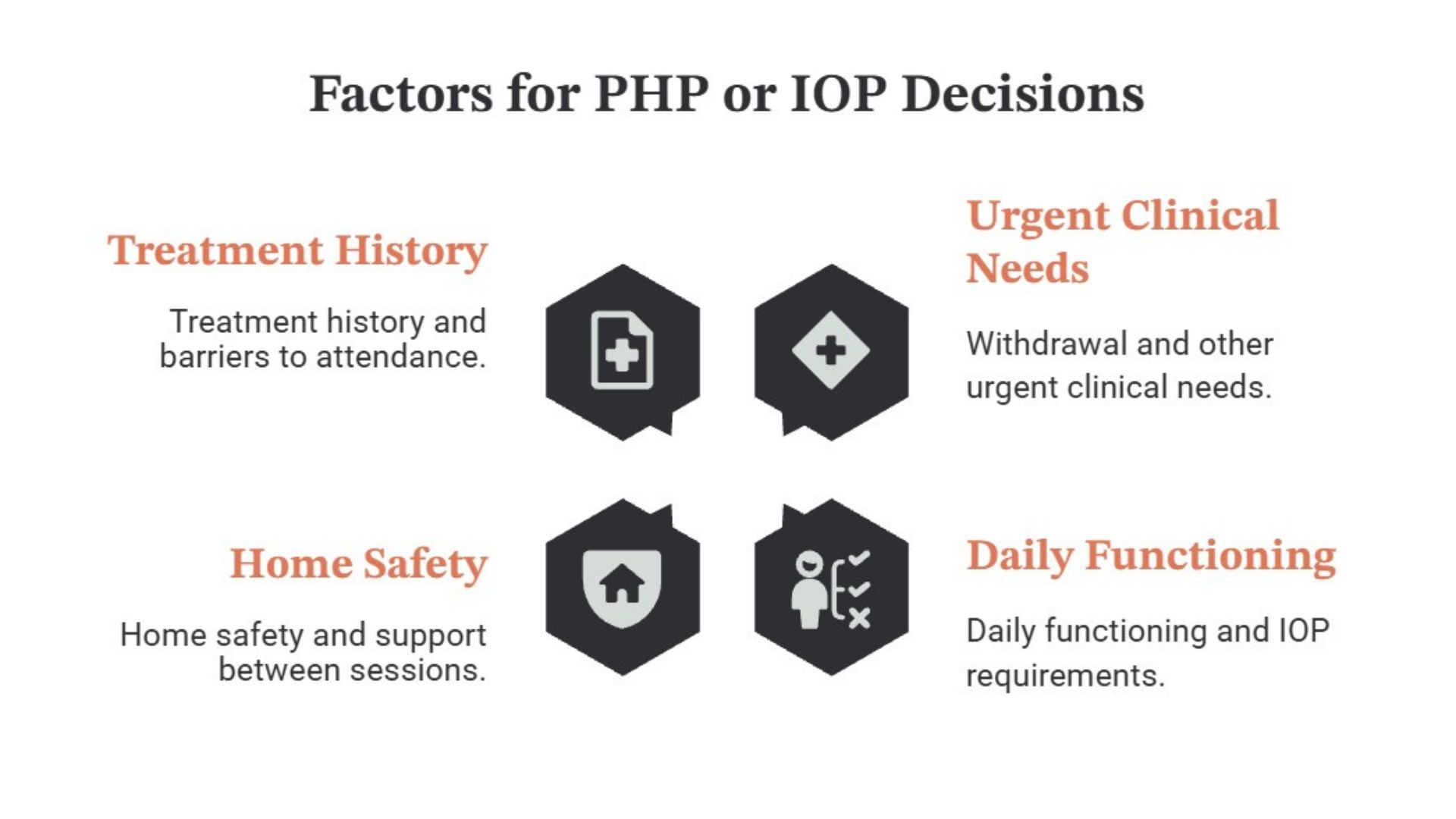
Here’s what the team will assess, from withdrawal risks to the support available between sessions.

Withdrawal and Other Urgent Clinical Needs

Withdrawal risk and medical stability need attention before outpatient placement. Depending on your situation, the assessment may point to medically supervised detox or another care setting.

Mental health symptoms matter too. A diagnosis alone doesn’t establish the level you need, so the team considers how symptoms affect your safety and ability to participate.

Co-occurring concerns should form part of the addiction-treatment assessment. Information about current medication and recent substance use also helps that assessment.

PHP and IOP have limits when immediate medical attention or continuous supervision is necessary. If there is immediate danger, call 911. For a suicide or mental health crisis, call or text 988.

Daily Functioning and IOP Requirements

Daily functioning includes basic self-care and the ability to keep a routine. Clinicians also consider whether you can participate in sessions and use coping skills when professional support is less immediate.

Example: Someone gets through every workday but drinks heavily each evening and regularly skips meals. They have also missed appointments and struggle to concentrate at home. Their employment doesn’t settle the care decision. A clinician still needs to understand how they cope outside work and what additional support would help.

Eligibility comes from that assessment alongside the programme’s admission criteria. We recommend asking what the provider requires for participation. The Medicare hours shown above describe coverage rules. They don’t establish someone’s clinical suitability on their own.

Home Safety and Support Between Sessions

The place you return to matters in both programmes. If other people use substances there, or reliable support is difficult to reach, tell the treatment team. If you live alone, discuss who you could contact.

More daytime care still leaves evenings and nights to plan for. The team may need to consider recovery housing or another setting that addresses your situation.

Housing and clinical treatment are separate arrangements. Ask where you would stay and what support would be available there. Accommodation should be discussed directly with the provider before you make plans.

Treatment History and Barriers to Attendance

Recent treatment helps the team understand what has helped and where difficulties remain. Worsening symptoms or limited progress may also affect the recommendation.

Bring details of recent care and current concerns. Include the names of any previous programmes. Then compare the actual IOP vs PHP program schedules with your commitments. Transport, work, and childcare can make attendance difficult, so discuss those barriers with the team.

We recommend asking how appropriate care could be made workable. Admissions can also help check benefits. Our explanation of how insurance coverage for rehab works provides background for that conversation.

An infographic presents four factors clinicians assess when recommending PHP or IOP. These include treatment history and barriers to attendance, alongside withdrawal and other urgent clinical needs. It also highlights daily functioning and IOP requirements, plus home safety and support between sessions. Four dark hexagonal icons represent each factor against a white background.

What Happens During PHP and IOP Sessions?

PHP and IOP sessions may include group work and coping-skills practice, alongside individual appointments and psychiatric support where provided. The mix depends on the programme and your plan.

IOP therapy can give you a place to work through difficulties that arise outside treatment. In a hypothetical session, you might identify a trigger, such as an argument that brings on an urge to drink. Then you could rehearse a response with the therapist, such as leaving the situation and contacting someone in your support network.

That practice gives you something concrete to try. Ask which appointments and services your proposed programme actually includes.

A woman in a red patterned top sits opposite a man who reclines on a black sofa in a bright counselling room. She holds a pen and clipboard as she faces him during a one-to-one conversation. A low table between them holds a white mug and a glass of water, with white shelving in the background.

Why Does Continuing Support Matter After IOP?

Continuing support gives you ways to address difficulties as formal treatment becomes less frequent.

A Philadelphia randomized trial of 262 adults with alcohol use disorder compared added support with standard care. All participants received IOP. Over 12 months, heavy drinking occurred on an average of 10.29% of days with standard care versus 5.41% with added telephone support.

Published in Addiction in 2022, the study measured heavy-drinking days. It supports discussing continuing care with your team, without establishing a recovery rate or comparing PHP with IOP.

Find the Right Outpatient Support at Legends Recovery

At Legends Recovery, we offer PHP, IOP, and standard outpatient care in Cleveland. If you’re comparing IOP vs PHP, we can discuss your needs, any clinical recommendations, and available programmes.

For intensive outpatient program addiction treatment, ask which therapies and support your plan would include. Our admissions team can also verify your insurance benefits and discuss expected costs and approval requirements.

Contact our admissions team today to take the next step in getting the support you need.

FAQs

How Long Is PHP Treatment?

PHP treatment length depends on your clinical needs and response to care. Ask about the expected timeframe and when progress will be reviewed. That estimate may change as your needs change.

How Long Does IOP Treatment Last?

IOP treatment length varies by programme and individual needs. Ask your provider about the expected timeframe and when progress will be reviewed. Your team may adjust that timeframe as your needs change.

What Comes First, PHP or IOP?

Either can come first. It depends on your clinical assessment. There is no fixed PHP vs IOP program sequence. Some people move from PHP to IOP, while others enter IOP directly or need more intensive support later. Your team can adjust care as your needs change.

Stay connected

Occasional resources and encouragement for the road ahead, whether it's yours or someone you love. No spam, unsubscribe anytime.
Thank you! Your submission has been received!
Oops! Something went wrong while submitting the form.