Understand what residential treatment involves, from daily routines and therapy to insurance coverage and support after rehab.
Staying somewhere unfamiliar can feel intimidating, especially when you cannot picture what happens between appointments. If you’re asking “what is residential treatment,” you may also wonder who you’ll spend time with and whether you’ll have space to yourself.
This guide focuses on adult drug and alcohol addiction care, with a practical look at an ordinary day and the questions to ask before admission.
Key Takeaways
- Residential treatment means living at a facility while receiving addiction care through therapy and a structured daily routine.
- A typical day includes check-ins, treatment sessions, meals, breaks, personal time, and rest, with activities varying by program.
- Medical detox may come first if withdrawal care is needed, though some people enter residential care directly.
- The right level of care and length of stay depend on clinical needs and progress.
- Your costs depend on the facility and insurance benefits, so request a written estimate before admission.
- Legends Recovery offers residential care in Green Springs and Defiance, Ohio, with admissions support and discharge planning.
What Is Residential Treatment for Addiction?
Residential treatment is live-in addiction care that combines therapy with a planned daily routine. You stay at the facility between sessions, with staff support available according to the program’s level of care.
Residential and hospital inpatient care differ in the medical support they provide. Hospital inpatient services provide hospital-level medical or psychiatric care, while the staff and medical care available differ between residential facilities. Some providers use both terms for the same program, so it helps to ask what care is available on-site.
With outpatient treatment, you attend scheduled sessions and return home afterward.
Admission Checks and What to Bring
At admission, staff assesses your immediate care needs and whether medical detox is necessary. You may enter residential care directly if withdrawal care is unnecessary or already completed.
Your packing list for residential treatment should follow the facility’s current rules.
| What to Prepare | What to Confirm |
|---|---|
| Documents | ID and insurance information |
| Medications | Prescription details and instructions for bringing medications |
| Clothing and toiletries | Comfortable clothes and permitted personal-care items |
| Personal belongings | Rules for phones and valuables |
A 2024 North Carolina study found that only 10.6% of 66 residential service providers provided medicines such as methadone or buprenorphine to treat opioid addiction on-site. The sample included licensed and unlicensed services. Before admission, you can ask how your chosen facility handles prescribed addiction medication.
What Does Rehab Look Like From Morning to Bedtime?
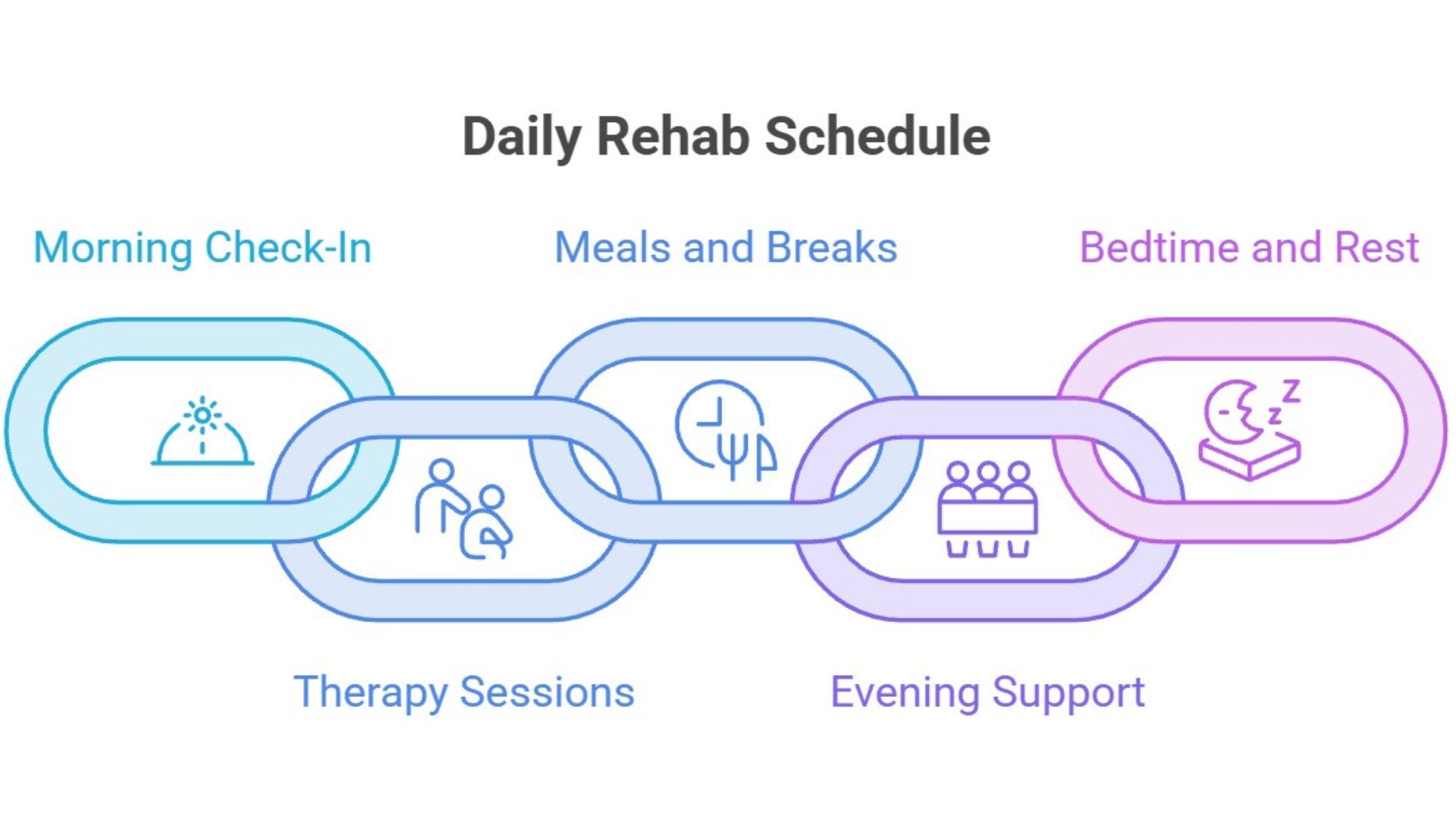
A day in residential rehab usually includes treatment sessions, meals, breaks, and time to rest. You live at the facility, so your surroundings matter too.
So, before admission, ask to see photos of the bedrooms, therapy rooms, dining areas, and shared spaces. You can also ask where you can spend quiet time between activities.
The example below shows how a day might unfold. Your actual schedule will depend on the facility and your care plan.
Morning Check-In and Breakfast
You might wake up with time to wash, get dressed and eat breakfast before the first scheduled activity. A brief check-in gives you a chance to describe how you slept or raise an immediate concern. Medication may be part of the morning when prescribed and scheduled.
For example, if you wake up anxious about joining a group, you can ask staff what to expect before it begins. The point is to speak up early so staff can respond to what you need that morning.
Therapy Sessions and Practice With Recovery Skills
Treatment sessions give you time to understand substance use patterns and practice responses you can use outside treatment. In residential drug treatment, a group might begin with a check-in, move into a discussion about triggers, and finish with a coping-skills exercise.
Cognitive behavioral therapy, or CBT, examines connections between thoughts, feelings, and behavior. CBT can also help you recognize and manage situations that could lead to substance use.
Imagine someone who thinks, “I’ve had an argument, so using is the only way to calm down.” A therapist might help them question that thought and rehearse another response, such as taking a pause and calling a support person.
Dialectical behavior therapy, or DBT, teaches skills for managing strong emotions and stressful situations. Private appointments offer room to discuss personal goals or concerns that feel difficult to raise in a group. Family appointments may address communication when appropriate. The care plan determines the mix and frequency.
The therapy approaches used at Legends Recovery include these methods alongside individual, group, and family therapy.

Meals, Breaks and Activities Between Sessions
Between appointments, you need time to eat, rest, and take in what you’ve discussed. A lunch break may give you a chance to sit with others or have a quieter moment before the afternoon begins.
Depending on the program, activities might include exercise, creative work, or time outside. Participation should account for your health and current needs. Quiet time could mean reading or writing down something you want to discuss later.
These breaks also give you time to practice everyday habits, such as eating regularly and asking for space when you feel overwhelmed.
Evening Peer Support and Personal Time
Life in rehab often becomes less appointment-focused in the evening, although the amount of personal time varies. Some programs hold a peer meeting or a reflection activity after daytime treatment ends.
You may have time to talk through a difficult moment from your day with peers. Later, the program’s rules may allow a family call or some time to yourself. Before admission, you can ask about phone access and whether weekend arrangements differ.
Bedtime, Overnight Support and Rest
Quiet hours help residents prepare for sleep, but there is no universal bedtime across facilities. You may have time to wind down before lights-out under the program’s rules.
Before your first night, learn how to reach staff if you feel distressed or have another concern. Ask who is available overnight and what help they can provide. Residential staffing should match the program’s level of care and does not automatically mean hospital-level monitoring.
Discharge Planning and Support After Residential Care
Your care team can help you prepare for discharge during your stay. Before you leave, you should know your next appointment and whom to contact for help. Further treatment depends on your needs.
In a 2024 Rhode Island study, 83.1% of participants reported some substance use treatment within 30 days after residential discharge. That figure describes the study’s participants. You can also stay connected through options such as ongoing support through Legends’ alumni program.
Does Insurance Cover Residential Treatment?
Your insurance may help pay for residential addiction treatment. The amount covered depends on your plan, the facility, and the care you need. Before admission, ask the treatment center and your insurer to explain your benefits and what you may need to pay yourself.
Check Coverage for Each Level of Care
Ask which services your plan covers, including medical detox, residential treatment, and follow-up outpatient care. If your care team recommends a partial hospitalization program, or PHP, or an intensive outpatient program, or IOP, ask about coverage for that next step too.
Approval for one service does not automatically confirm coverage for every part of your treatment.
Ask Whether Prior Authorization Is Required
Some plans require approval before you begin certain services. This is called prior authorization. Your treatment provider may need to send information about your health and why the recommended care is needed.
Ask who handles this request, whether approval is in place, and whether further reviews are needed during your stay. Prior authorization does not guarantee that your insurer will pay every charge.
Understand Your Expected Costs
Ask whether the specific facility is in your plan’s network. Then request a written estimate of your costs. Depending on your plan, these may include a deductible, which is an amount you pay before certain benefits begin, a fixed copayment, or a percentage of covered charges called coinsurance. Ask whether any services are billed separately and how a change in your length of stay could affect the estimate.
Legends Recovery accepts Medicaid and most major insurance plans. You can ask our admissions team to check your specific plan and explain the next steps before admission.
Residential Addiction Care at Legends Recovery in Ohio
If you’re looking for a residential treatment center in Ohio, Legends Recovery offers care in Green Springs and Defiance. Our Cleveland location provides outpatient care, so confirm the location when you discuss admission.
Both residential location pages list private bedrooms and bathrooms. Green Springs also lists a yoga and meditation room, while Defiance lists a hair and beauty salon. These details can help you picture the surroundings and prepare questions about your stay.
The admissions team can discuss location arrangements and transportation for your circumstances. You can also ask about current availability and any accessibility needs before making plans. A conversation gives you an opportunity to assess whether the setting fits your needs.
Conclusion
Understanding what residential treatment is can make the next conversation more specific. You can ask about the support you need and what admission would involve.
You can start by asking Legends Recovery to check your insurance and explain your expected costs. Our admissions team can also help you understand which program may fit your needs.
FAQs
When Is Residential Treatment Necessary?
Residential care may be appropriate when outpatient support cannot meet your needs. A clinician reviews your substance use, health, and support at home to recommend a suitable level of care.
How Much Does Residential Treatment Cost?
Your cost depends on your insurance benefits, the facility, and your length of stay. Ask Legends Recovery to check your coverage and provide a written estimate of what you may need to pay.
How Long Are Residential Treatment Programs?
Stays vary with your care needs. Legends Recovery describes its offering as around 30 days. A clinical assessment helps determine whether short-term residential treatment fits your needs.
Understand what residential treatment involves, from daily routines and therapy to insurance coverage and support after rehab.
Staying somewhere unfamiliar can feel intimidating, especially when you cannot picture what happens between appointments. If you’re asking “what is residential treatment,” you may also wonder who you’ll spend time with and whether you’ll have space to yourself.
This guide focuses on adult drug and alcohol addiction care, with a practical look at an ordinary day and the questions to ask before admission.
Key Takeaways
- Residential treatment means living at a facility while receiving addiction care through therapy and a structured daily routine.
- A typical day includes check-ins, treatment sessions, meals, breaks, personal time, and rest, with activities varying by program.
- Medical detox may come first if withdrawal care is needed, though some people enter residential care directly.
- The right level of care and length of stay depend on clinical needs and progress.
- Your costs depend on the facility and insurance benefits, so request a written estimate before admission.
- Legends Recovery offers residential care in Green Springs and Defiance, Ohio, with admissions support and discharge planning.
What Is Residential Treatment for Addiction?
Residential treatment is live-in addiction care that combines therapy with a planned daily routine. You stay at the facility between sessions, with staff support available according to the program’s level of care.
Residential and hospital inpatient care differ in the medical support they provide. Hospital inpatient services provide hospital-level medical or psychiatric care, while the staff and medical care available differ between residential facilities. Some providers use both terms for the same program, so it helps to ask what care is available on-site.
With outpatient treatment, you attend scheduled sessions and return home afterward.
Admission Checks and What to Bring
At admission, staff assesses your immediate care needs and whether medical detox is necessary. You may enter residential care directly if withdrawal care is unnecessary or already completed.
Your packing list for residential treatment should follow the facility’s current rules.
| What to Prepare | What to Confirm |
|---|---|
| Documents | ID and insurance information |
| Medications | Prescription details and instructions for bringing medications |
| Clothing and toiletries | Comfortable clothes and permitted personal-care items |
| Personal belongings | Rules for phones and valuables |
A 2024 North Carolina study found that only 10.6% of 66 residential service providers provided medicines such as methadone or buprenorphine to treat opioid addiction on-site. The sample included licensed and unlicensed services. Before admission, you can ask how your chosen facility handles prescribed addiction medication.
What Does Rehab Look Like From Morning to Bedtime?
A day in residential rehab usually includes treatment sessions, meals, breaks, and time to rest. You live at the facility, so your surroundings matter too.
So, before admission, ask to see photos of the bedrooms, therapy rooms, dining areas, and shared spaces. You can also ask where you can spend quiet time between activities.
The example below shows how a day might unfold. Your actual schedule will depend on the facility and your care plan.
Morning Check-In and Breakfast
You might wake up with time to wash, get dressed and eat breakfast before the first scheduled activity. A brief check-in gives you a chance to describe how you slept or raise an immediate concern. Medication may be part of the morning when prescribed and scheduled.
For example, if you wake up anxious about joining a group, you can ask staff what to expect before it begins. The point is to speak up early so staff can respond to what you need that morning.
Therapy Sessions and Practice With Recovery Skills
Treatment sessions give you time to understand substance use patterns and practice responses you can use outside treatment. In residential drug treatment, a group might begin with a check-in, move into a discussion about triggers, and finish with a coping-skills exercise.
Cognitive behavioral therapy, or CBT, examines connections between thoughts, feelings, and behavior. CBT can also help you recognize and manage situations that could lead to substance use.
Imagine someone who thinks, “I’ve had an argument, so using is the only way to calm down.” A therapist might help them question that thought and rehearse another response, such as taking a pause and calling a support person.
Dialectical behavior therapy, or DBT, teaches skills for managing strong emotions and stressful situations. Private appointments offer room to discuss personal goals or concerns that feel difficult to raise in a group. Family appointments may address communication when appropriate. The care plan determines the mix and frequency.
The therapy approaches used at Legends Recovery include these methods alongside individual, group, and family therapy.
Meals, Breaks and Activities Between Sessions
Between appointments, you need time to eat, rest, and take in what you’ve discussed. A lunch break may give you a chance to sit with others or have a quieter moment before the afternoon begins.
Depending on the program, activities might include exercise, creative work, or time outside. Participation should account for your health and current needs. Quiet time could mean reading or writing down something you want to discuss later.
These breaks also give you time to practice everyday habits, such as eating regularly and asking for space when you feel overwhelmed.
Evening Peer Support and Personal Time
Life in rehab often becomes less appointment-focused in the evening, although the amount of personal time varies. Some programs hold a peer meeting or a reflection activity after daytime treatment ends.
You may have time to talk through a difficult moment from your day with peers. Later, the program’s rules may allow a family call or some time to yourself. Before admission, you can ask about phone access and whether weekend arrangements differ.
Bedtime, Overnight Support and Rest
Quiet hours help residents prepare for sleep, but there is no universal bedtime across facilities. You may have time to wind down before lights-out under the program’s rules.
Before your first night, learn how to reach staff if you feel distressed or have another concern. Ask who is available overnight and what help they can provide. Residential staffing should match the program’s level of care and does not automatically mean hospital-level monitoring.
Discharge Planning and Support After Residential Care
Your care team can help you prepare for discharge during your stay. Before you leave, you should know your next appointment and whom to contact for help. Further treatment depends on your needs.
In a 2024 Rhode Island study, 83.1% of participants reported some substance use treatment within 30 days after residential discharge. That figure describes the study’s participants. You can also stay connected through options such as ongoing support through Legends’ alumni program.
Does Insurance Cover Residential Treatment?
Your insurance may help pay for residential addiction treatment. The amount covered depends on your plan, the facility, and the care you need. Before admission, ask the treatment center and your insurer to explain your benefits and what you may need to pay yourself.
Check Coverage for Each Level of Care
Ask which services your plan covers, including medical detox, residential treatment, and follow-up outpatient care. If your care team recommends a partial hospitalization program, or PHP, or an intensive outpatient program, or IOP, ask about coverage for that next step too.
Approval for one service does not automatically confirm coverage for every part of your treatment.
Ask Whether Prior Authorization Is Required
Some plans require approval before you begin certain services. This is called prior authorization. Your treatment provider may need to send information about your health and why the recommended care is needed.
Ask who handles this request, whether approval is in place, and whether further reviews are needed during your stay. Prior authorization does not guarantee that your insurer will pay every charge.
Understand Your Expected Costs
Ask whether the specific facility is in your plan’s network. Then request a written estimate of your costs. Depending on your plan, these may include a deductible, which is an amount you pay before certain benefits begin, a fixed copayment, or a percentage of covered charges called coinsurance. Ask whether any services are billed separately and how a change in your length of stay could affect the estimate.
Legends Recovery accepts Medicaid and most major insurance plans. You can ask our admissions team to check your specific plan and explain the next steps before admission.
Residential Addiction Care at Legends Recovery in Ohio
If you’re looking for a residential treatment center in Ohio, Legends Recovery offers care in Green Springs and Defiance. Our Cleveland location provides outpatient care, so confirm the location when you discuss admission.
Both residential location pages list private bedrooms and bathrooms. Green Springs also lists a yoga and meditation room, while Defiance lists a hair and beauty salon. These details can help you picture the surroundings and prepare questions about your stay.
The admissions team can discuss location arrangements and transportation for your circumstances. You can also ask about current availability and any accessibility needs before making plans. A conversation gives you an opportunity to assess whether the setting fits your needs.
Conclusion
Understanding what residential treatment is can make the next conversation more specific. You can ask about the support you need and what admission would involve.
You can start by asking Legends Recovery to check your insurance and explain your expected costs. Our admissions team can also help you understand which program may fit your needs.
FAQs
When Is Residential Treatment Necessary?
Residential care may be appropriate when outpatient support cannot meet your needs. A clinician reviews your substance use, health, and support at home to recommend a suitable level of care.
How Much Does Residential Treatment Cost?
Your cost depends on your insurance benefits, the facility, and your length of stay. Ask Legends Recovery to check your coverage and provide a written estimate of what you may need to pay.
How Long Are Residential Treatment Programs?
Stays vary with your care needs. Legends Recovery describes its offering as around 30 days. A clinical assessment helps determine whether short-term residential treatment fits your needs.